


Signs You Need to File a Storm Damage Roof Insurance Claim
.webp)
When severe weather hits, many homeowners aren’t sure when it’s time to file a storm damage roof insurance claim. Whether it’s hail, wind, or flying debris, storm damage can weaken your roof in ways that may not be obvious from the ground. Waiting too long to take action can lead to denied claims, out-of-pocket costs, or even major structural issues.
This guide explains how to recognize storm damage, understand the roof insurance claim process in Texas, and work with trusted professionals like Legacy Roofing and General Contracting to ensure your claim is handled properly.
Why Identifying Storm Damage Early Matters
Storm damage can create hidden problems that worsen over time. Even minor bruises on shingles can turn into leaks, mold growth, and insulation damage if ignored. Many homeowners don’t realize that insurance companies often have deadlines, especially for hail claims. For example, the hail damage insurance claim time limit in Texas can vary by policy, but most carriers require claims within 6–12 months after a storm.
The sooner you recognize roof damage and schedule a roof inspection for insurance claim purposes, the better your chances of being approved and fully reimbursed.
Common Signs You Need to File a Roof Insurance Claim
Knowing what to look for after a storm helps you determine if it’s time to file a claim. Here are the most important signs:
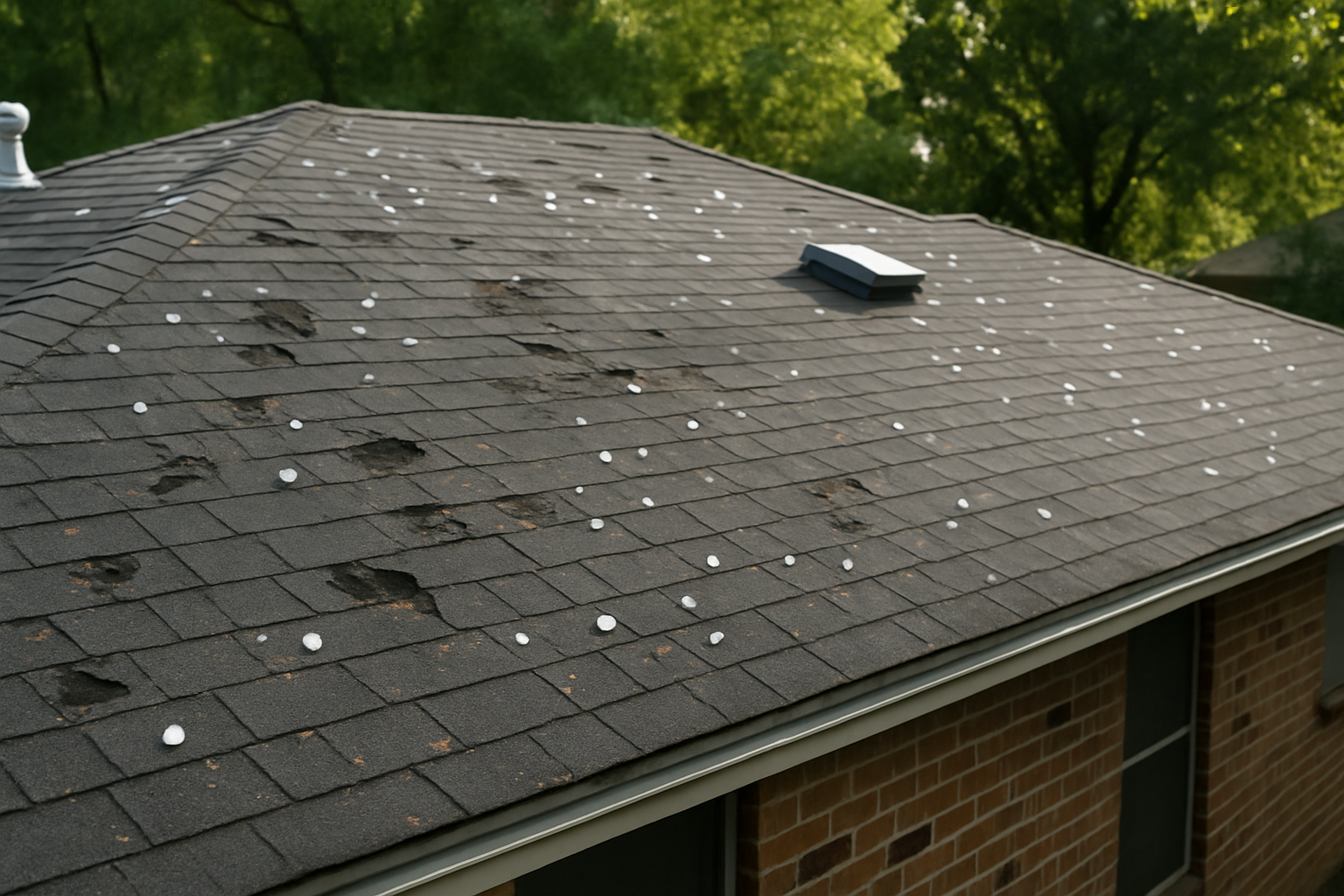
Visible Hail Damage
Hail is one of the leading causes of roof deterioration in Texas. Hailstones bruise, crack, and fracture shingles. If you notice:
- Round black or dark spots
- Granule loss
- Dents on shingles, vents, gutters, or flashing
- Soft, spongy areas
If you notice these signs of impact, such as bruised shingles, granule loss, dents on metal components, or cracked surfaces, you may need to file a hail damage roof insurance claim to ensure the damage is properly inspected, documented, and covered by your homeowner’s insurance.
Wind Damage
High winds can rip shingles off or lift them, creating vulnerabilities that lead to leaks. You may find:
- Missing shingles
- Raised shingle edges
- Damaged ridge caps
- Exposed underlayment
Wind damage is typically covered under most roofing insurance claims for storm damage.
Interior Leaks or Stains
Brown spots on ceilings or walls, bubbling paint, moldy smells, or moisture in the attic are often signs of hidden roof damage requiring immediate attention.
Granules in Gutters
Excessive granule loss is a major indicator of shingle deterioration following hail or wind events.
Structural or Impact Damage
Fallen branches, cracked skylights, or damaged fascia boards may require a storm damage roof insurance claim, especially in more severe storms.
How Much Hail Damage for Insurance to Replace Roof?
Many homeowners wonder how much damage is required before insurance approves a full roof replacement. The answer depends on:
- The number of affected shingles
- Roof age and condition
- Insurance adjuster assessment
- Type of storm damage
Typically, if there is widespread functional damage, meaning the shingles can no longer protect your home, insurers will approve replacement. A professional roof inspection report for insurance can make a big difference.
Understanding the Roof Insurance Claim Process in Texas
Filing a roof insurance claim process in Texas may feel overwhelming, but understanding the steps makes it easier.
Step 1: Schedule a Professional Roof Inspection
Before you call insurance, many roofing experts recommend contacting a local contractor first. Why?
Contractors like Legacy Roofing and General Contracting provide a thorough inspection and identify damage that insurance adjusters sometimes overlook. Their contractor estimate for the insurance company makes your claim stronger from the start.
Step 2: File the Claim
Once damage is confirmed, you can begin your roofing insurance claims for storm damage by contacting your insurer. Provide:
- Date of the storm
- Description of the damage
- Photos (if available)
- The professional inspection findings
Step 3: Meet the Adjuster
Insurance adjusters will visit your home to assess the roof. Your roofing contractor should be present to ensure:
- All storm damage is documented
- No items are missed
- Code requirements are considered
- You receive fair compensation
This is where having roofing companies that work with insurance claims becomes invaluable.
Step 4: Review the Insurance Estimate
Insurance companies provide a breakdown of covered repairs or replacement costs. This is where you compare their estimate with the contractor’s evaluation.
Step 5: Roof Replacement or Repairs
Once approved, storm damage roofers can begin restoring your roof to pre-storm condition, often better, thanks to updated materials or code upgrades.
How Do Roofing Companies Work With Insurance Companies?
A major advantage of choosing a company like Legacy Roofing and General Contracting is their ability to coordinate directly with insurance carriers.
Here’s how roofing companies help:
- Provide detailed inspection reports
- Meet adjusters to verify damage
- Help with documentation and paperwork
- Explain confusing insurance terminology
- Negotiate when needed
- Ensure the project meets insurance and code standards
This takes stress off the homeowner and increases the likelihood of full coverage approval.
Storm Damage Roof Insurance Claims in Dallas, TX
North Texas, especially Dallas and surrounding areas, is known for powerful hailstorms and high winds. Filing storm damage roof insurance claims in Dallas, and Frisco TX is extremely common, but insurers also scrutinize claims heavily in high-risk regions.
Working with a local, experienced contractor improves your chances of success because they:
- Understand local storm patterns
- Know how insurers evaluate Dallas-area roof claims
- Can provide accurate damage documentation
Legacy Roofing and General Contracting has years of experience helping Dallas homeowners navigate roof insurance claims after hail, wind, and severe storm events.
How Long After Hail Damage Can I Claim?
Homeowners often wonder: How long after hail damage can I claim?
In most cases:
- Texas policies require filing within 6 months to 1 year
- Some insurers allow up to 2 years
- Waiting too long could result in denial
This is why knowing your hail damage insurance claim time limit in Texas is crucial. Legacy Roofing and General Contracting can help you determine your deadline based on your policy.
Average Insurance Payout for Hail Damage Roof
The average insurance payout for hail damage roof varies, but most Texas homeowners receive between:
- $8,000 and $30,000 for asphalt shingle roofs
- $15,000 to $50,000+ for metal, tile, or specialty roofs
Your home's roof size, materials, and the storm’s severity all play a role.
Should You Contact Your Insurance First or a Roofing Company?
Homeowners frequently ask: Do I contact insurance first or contact a roofing company?
The recommended approach:
- Contact a roofing company first for a professional inspection.
- Then file your insurance claim with confidence and supporting documentation.
This prevents denied claims and ensures you know the full scope of damage before the adjuster arrives.
Why Choose Legacy Roofing and General Contracting
Legacy Roofing and General Contracting is known for:
- Accurate storm damage assessments
- High-quality roof replacements
- Detailed insurance documentation
- Helping homeowners every step of the claim process
- Quick response after major storms
- Experienced storm damage roofers for Texas and Oklahoma
Their team specializes in roof hail damage insurance claim support and offers reliable, honest service for residential and commercial properties.
Frequently Asked Questions
What does insurance typically cover after a storm?
Most policies cover hail, wind, falling debris, and other storm-related roof damage.
Will my premium go up after filing a storm claim?
Storm claims usually do not raise premiums because they’re considered “acts of nature.”
Can insurance deny my claim?
Yes, especially if damage is old, unreported, or poorly documented. That’s why a proper roof inspection is essential.
Does insurance pay for full roof replacement?
If there is functional damage across multiple shingles or sections, insurers usually approve replacement.
How long does it take to complete a claim?
Most claims take 1 - 3 weeks depending on inspection scheduling, adjuster availability, and claim volume during storm season.
Conclusion
Filing a storm damage roof insurance claim doesn’t have to be overwhelming. With the right roofing partner, clear documentation, and timely action, you can protect your home and secure the coverage you deserve.
Legacy Roofing and General Contracting is here to help you through every step, from inspection to claim approval to full restoration. If you suspect storm or hail damage, schedule a roof inspection today and ensure your home is fully protected.


.svg)
.svg)

.svg)